~/guides/REPLICA.md
Replica: 11 free Claude skills that rebuild an app you pay for, as your own version
Replica maps the original app, rebuilds it screen by screen, tests it, reads real reviews to fix what users hate, then rebrands and ships it. Install + order.
That app you pay for every month: Claude Code can now rebuild your own version of it. The tool is Replica, 11 free Claude skills (MIT licence); I checked its GitHub page and README on 30 October 2026. This is the full version of my REPLICA reel: how it works, how to install it, the order to run the 11 skills, and the line it will not cross.
01What you get
Replica does not copy code and it does not crack anything. It rebuilds the features and flows of the app you want to replace, then reads that app's bad reviews and fixes the things users hate in your version.
In this guide:
- Replica's 5 big steps: map, rebuild, test, fix the complaints, ship.
- The two commands that install it in Claude Code.
- The order of the 11 skills and what each one does.
- What it deliberately will not do: no copying the original's code, logo, copy or content.
02What it is: 11 skills, no copied code
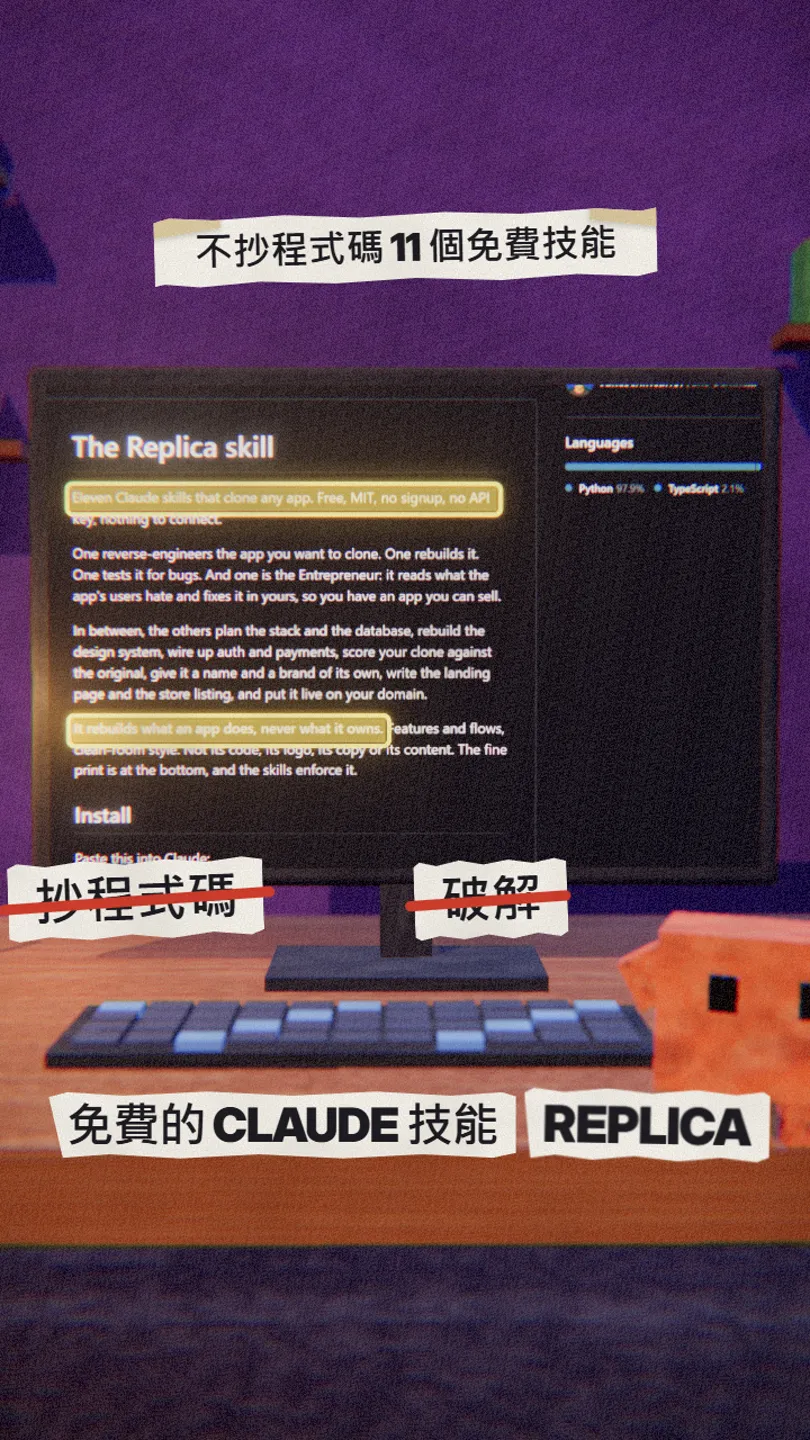
The README is explicit: it rebuilds what an app does (features and flows), clean-room style; the original's code, logo, copy and content are off limits, and the skills enforce it. Free, MIT, no signup, no API key.
/plugin marketplace add Jakeschincariol/replica-skill
/plugin install replica-skill@replica-skill
03Step 1: map every screen and flow of the original
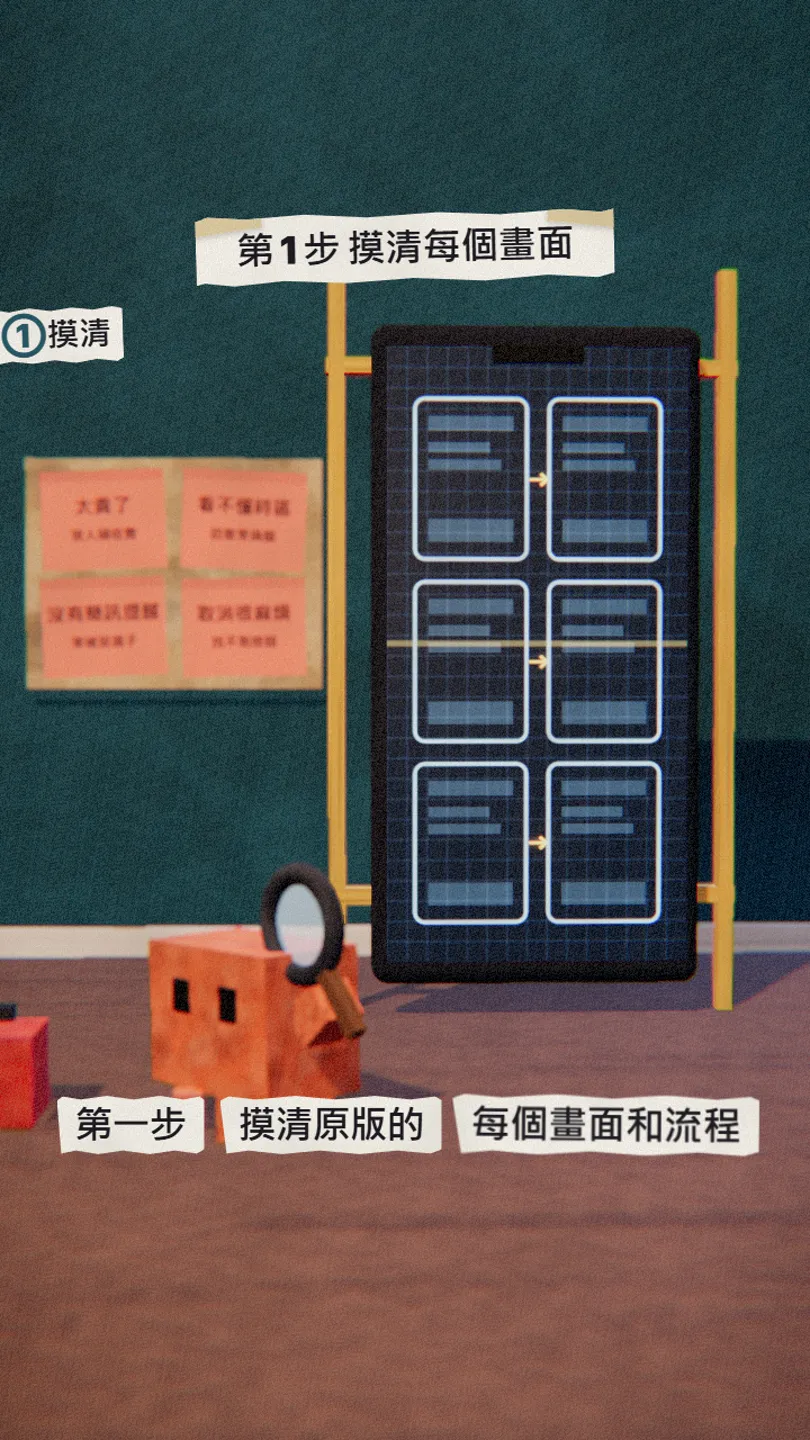
/replica-recon works from public pages, screenshots, store listings and your own account, and writes out the screens, flows, components and an inferred data model into replica/recon.md plus a feature list. Every later skill reads that folder and continues.
/replica-recon [URL of the app you want to replace]
04Steps 2 and 3: rebuild screen by screen, then click through every flow
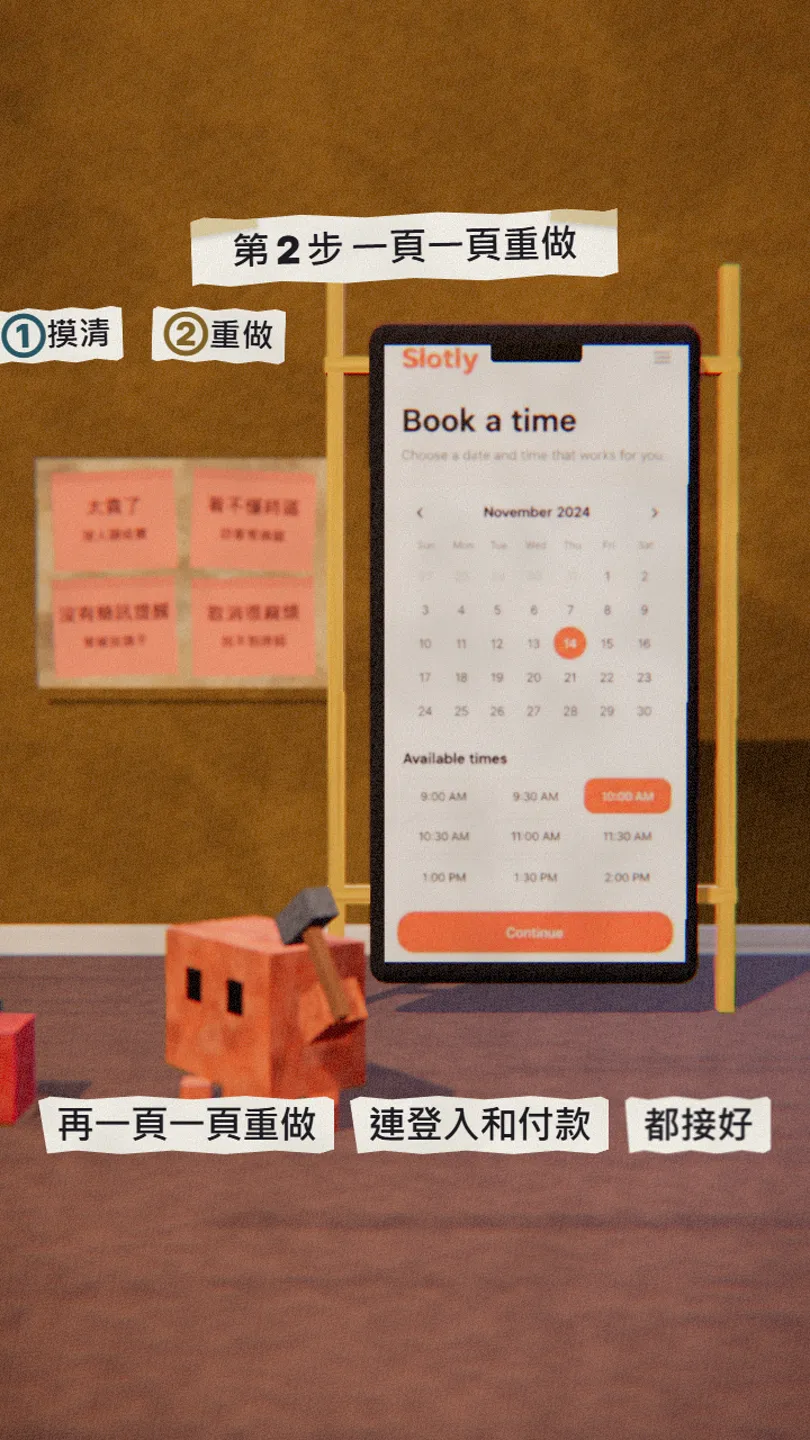
The README's order: architect plans the stack, schema and API → design rebuilds the design system as your own tokens → build rebuilds screen by screen → backend wires auth, database, payments and integrations.
/replica-test writes a test plan from the flows recon found, clicks through every flow and logs bugs by severity. /replica-diff then compares your version with the original and gives a parity score plus what is missing.
05Step 4: read the bad reviews and fix what users hate
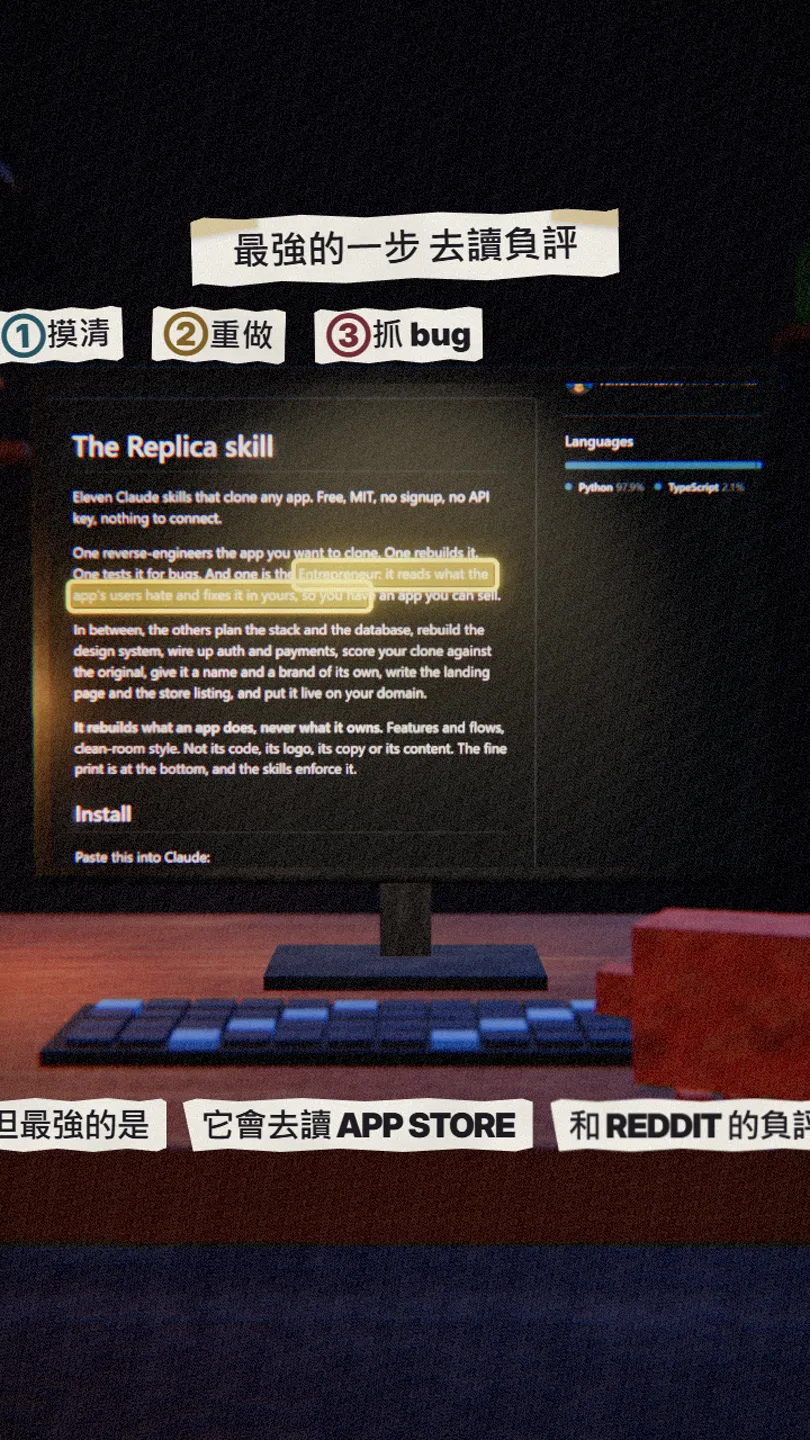
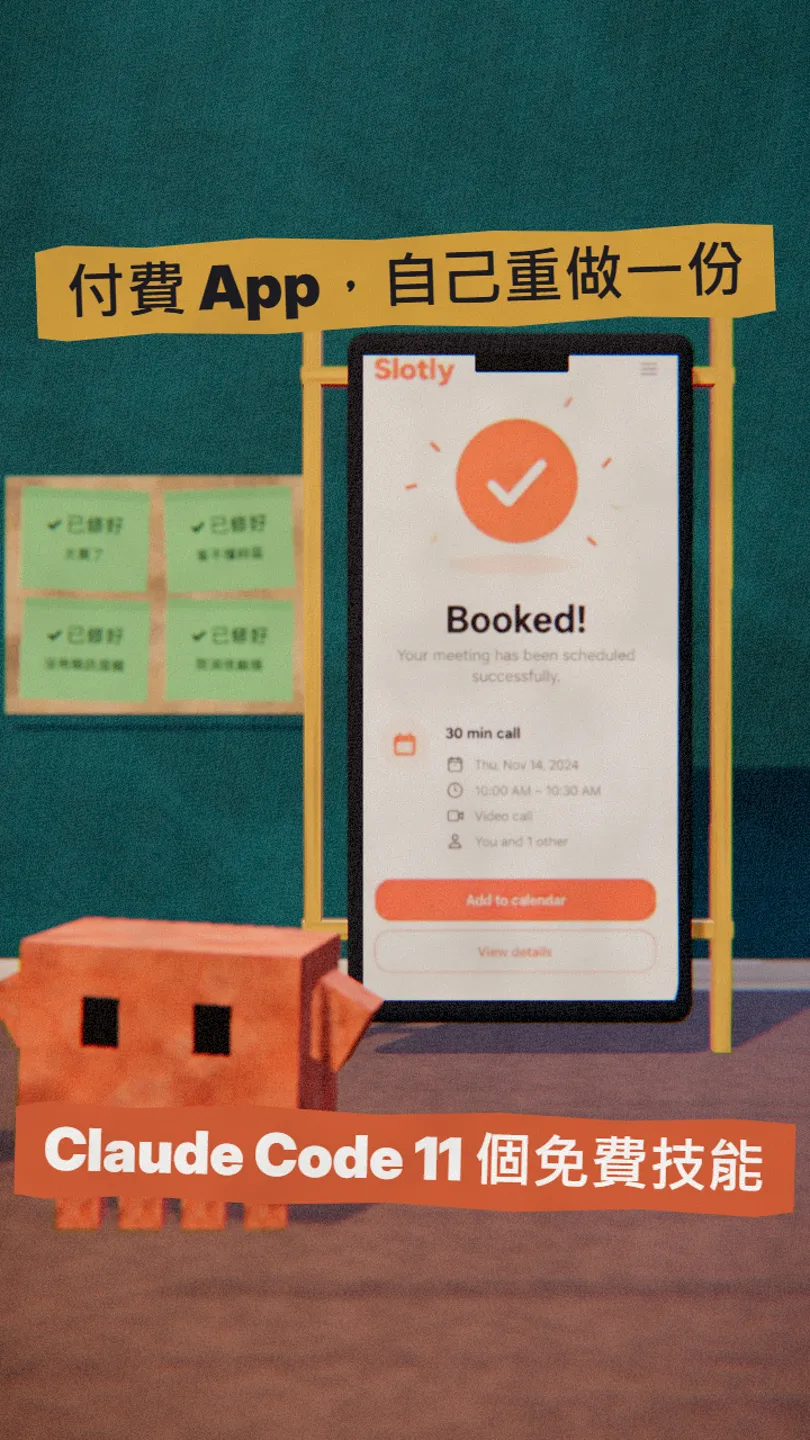
This is the part I like most. /replica-entrepreneur gathers real reviews from the App Store, G2, Capterra and Reddit, groups the complaints with counts and linked quotes, and turns them into a fix list and a positioning angle for your version. The README's example is a booking app: per-seat price jumps, no text reminders, guests confused by time zones; so your version gets flat pricing, SMS reminders and a time-zone confirm step.
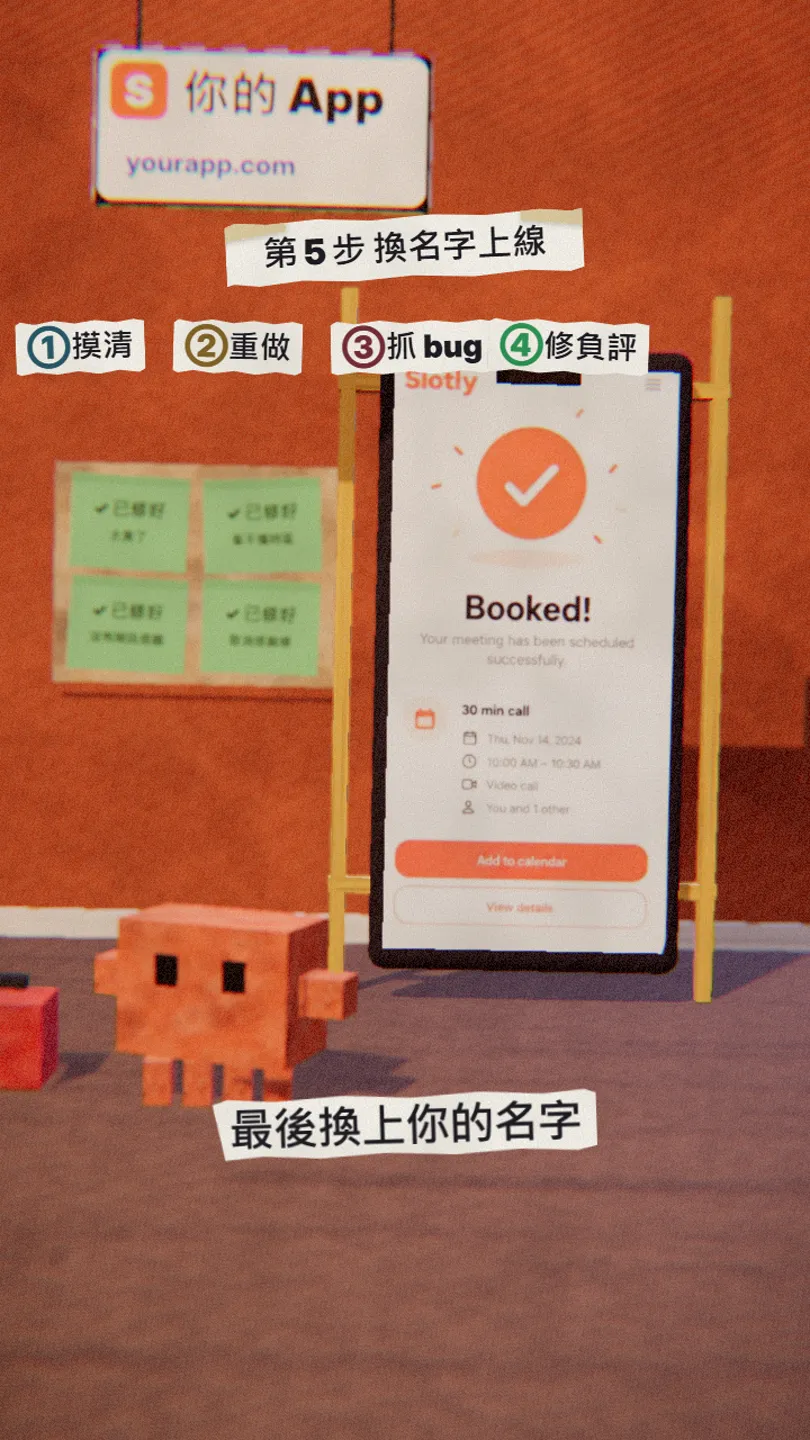
06Step 5: give it your name and ship it on your domain
/replica-brand names it (with the trademark and domain checks to run), gives it a new palette and logo brief, then sweeps the code until nothing of the original is left. /replica-launch writes the landing page, pricing and store listing, and /replica-deploy runs the preflight, gives you the DNS records for your domain and ships when you say go.
recon → architect → design → build → backend → test → diff → entrepreneur → brand → launch → deploy
07Good to know
- It rebuilds features and flows only, never the original's code, logo, copy or content; check trademarks yourself before you pick a name.
- The skills are free, but Claude Code uses your Claude plan or API credits; running all 11 steps is a big project and takes a fair amount of usage and time.
- The tools need Python 3.8 or newer; nothing to pip install.
- Only install from the official repo Jakeschincariol/replica-skill, not look-alikes.
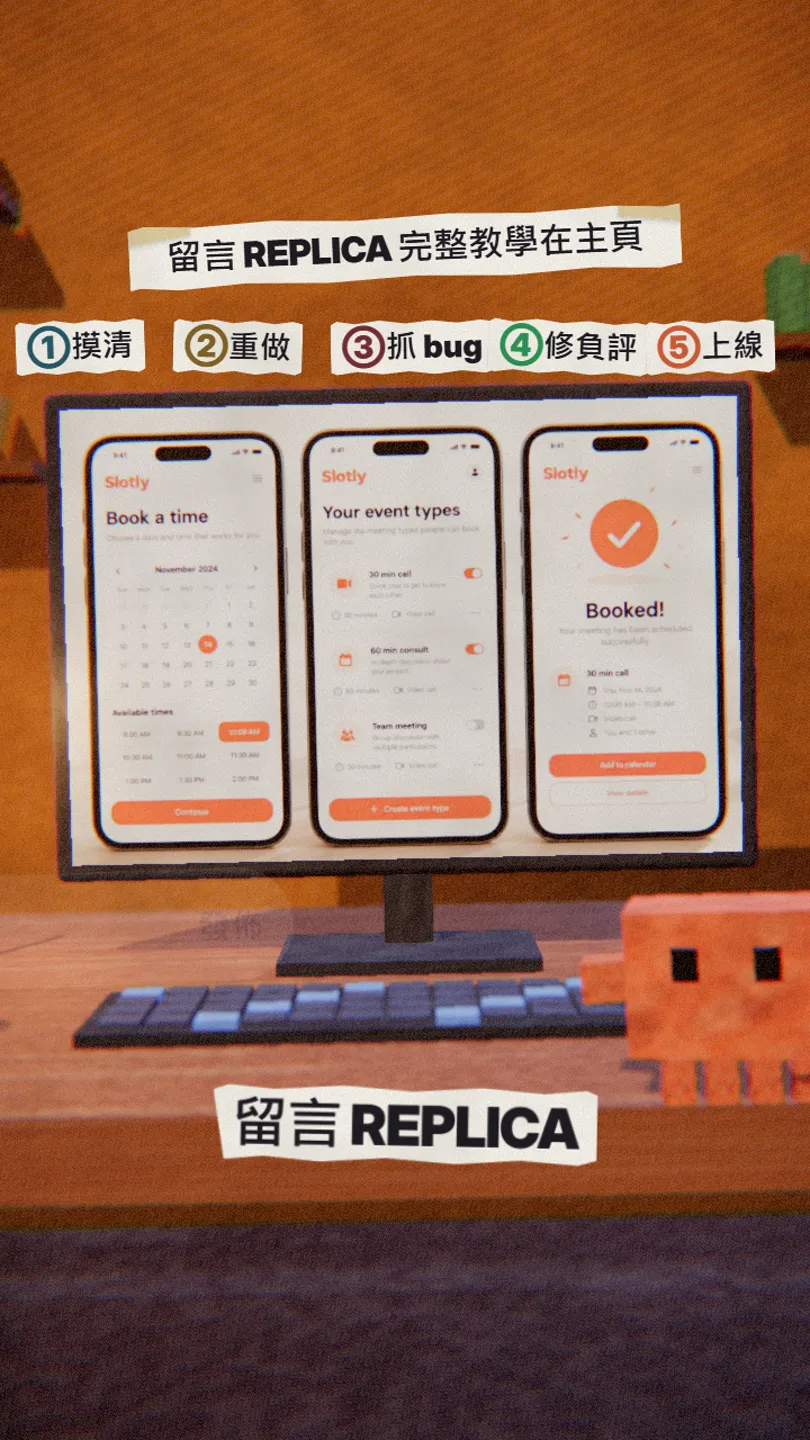
- The "Slotly" app in the reel and this guide is a ChatGPT illustration, and the sticky-note complaints are my own examples.
Sources
What should the next reel cover?
I test Claude and AI tools every day and turn the useful ones into reels. Follow @vivianlin.tech to catch each new guide.