~/guides/BITES.md
What is a token? Claude eats your words in bites: newer models cut about 30% more, and two ways to save
A token is one bite of text. Claude 4.7 and later cut the same text into about 30% more of them. How that hits memory and API cost, plus two fixes.
Claude doesn't read your message word by word. It first cuts the text into bites, and each bite is called a token. Your limits, Claude's memory and the API bill are all counted in them. This is the full version of the BITES reel: I explain tokens with a sandwich, then walk through three things Anthropic's own docs say (newer models make about 30% more tokens from the same text, tokens fill the memory, and on the API output costs 5x input), and finish with two fixes you can use today, with lines you can copy.
01The result first: one sentence is 10 bites to Claude
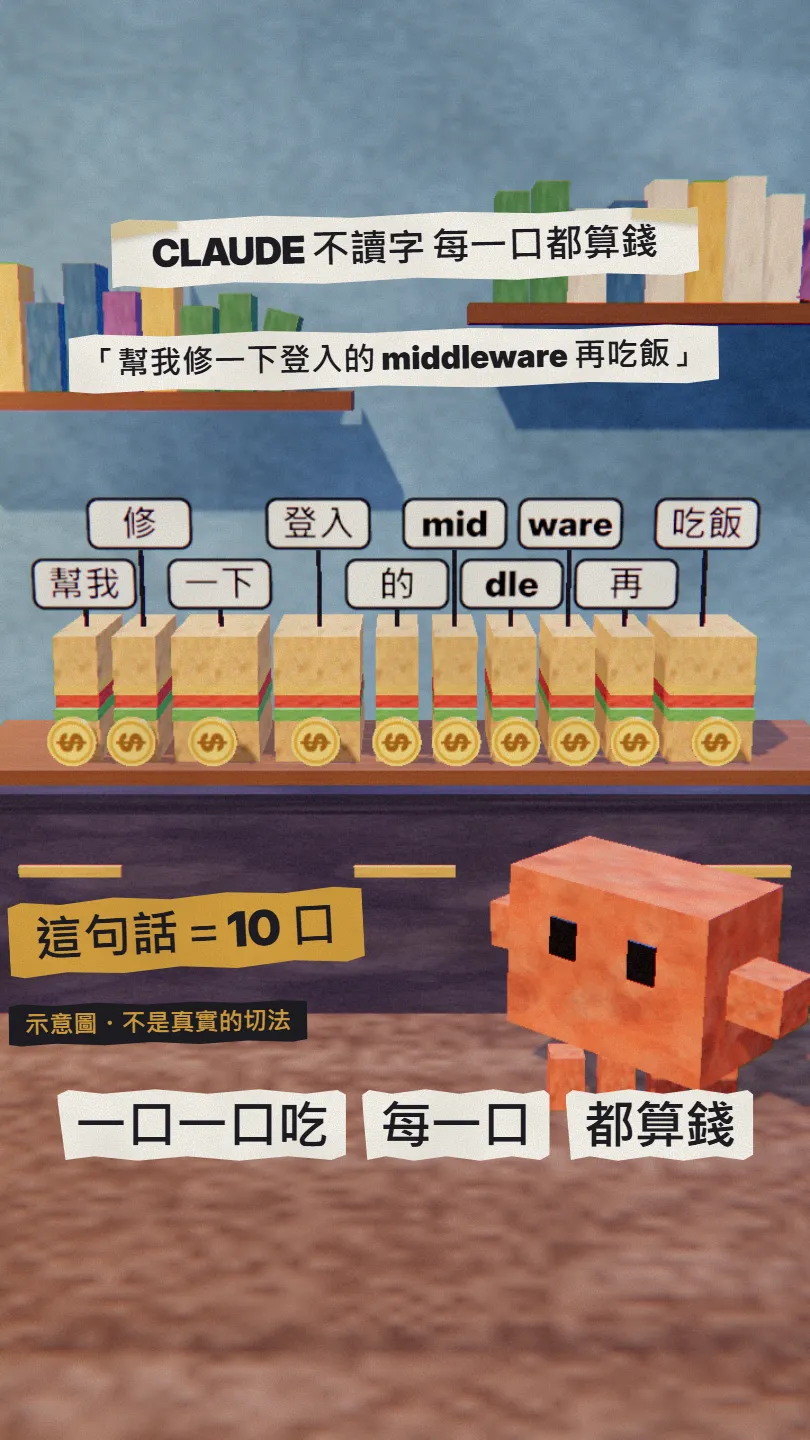
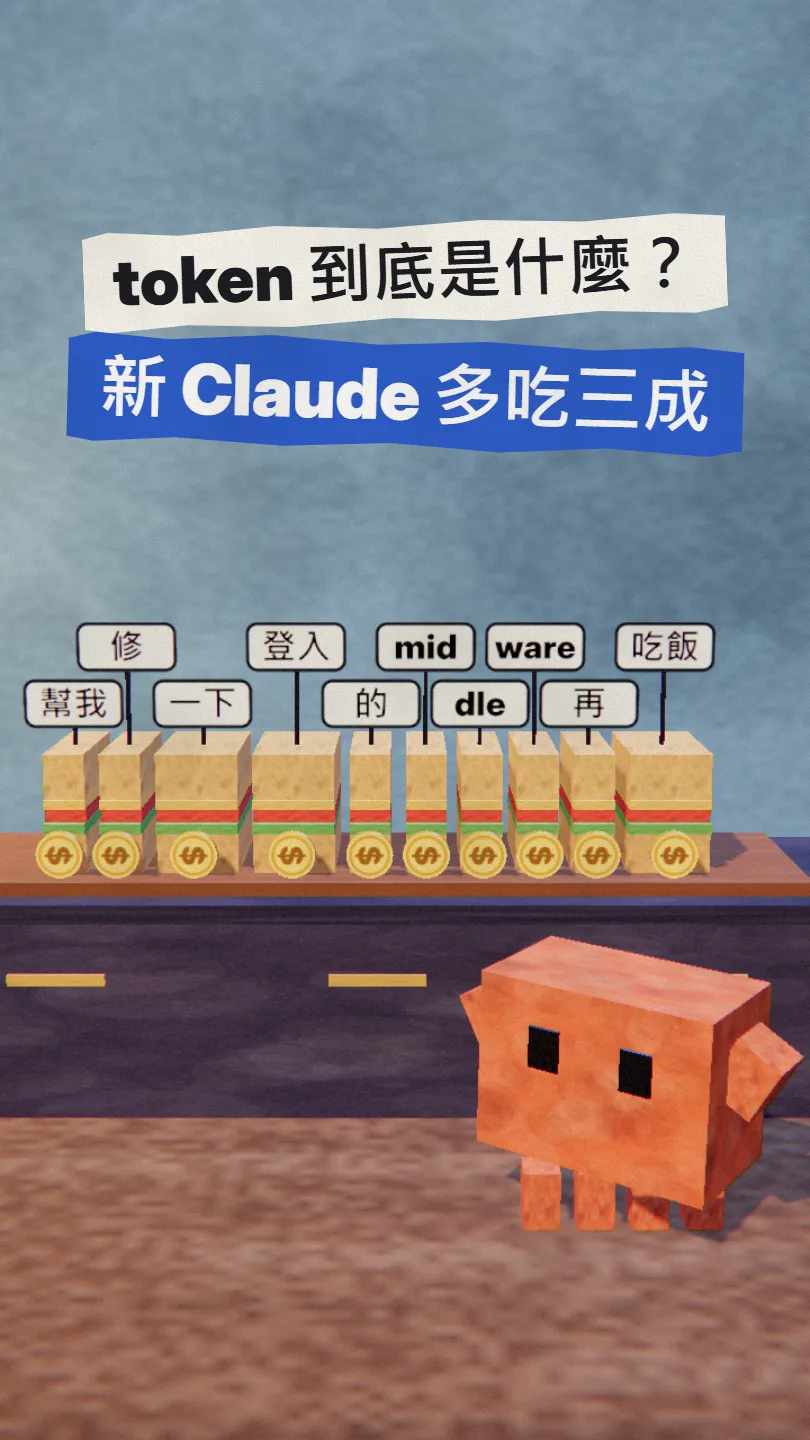
Think of a sentence you type as a sub sandwich. Claude can't swallow it whole, so it cuts it into small pieces first, and each piece is one token. By the end of this article you will have:
- A way to say it without a definition: a token = one bite of text for Claude.
- Three facts from the official docs: newer models make about 30% more, tokens fill the memory, API output costs 5x input.
- Two fixes: start a new chat when the topic changes, and ask for shorter answers, with lines you can paste.
- A way to check: count with the official token counting before you send.
02What a token is: a short word is one bite, a long word is several
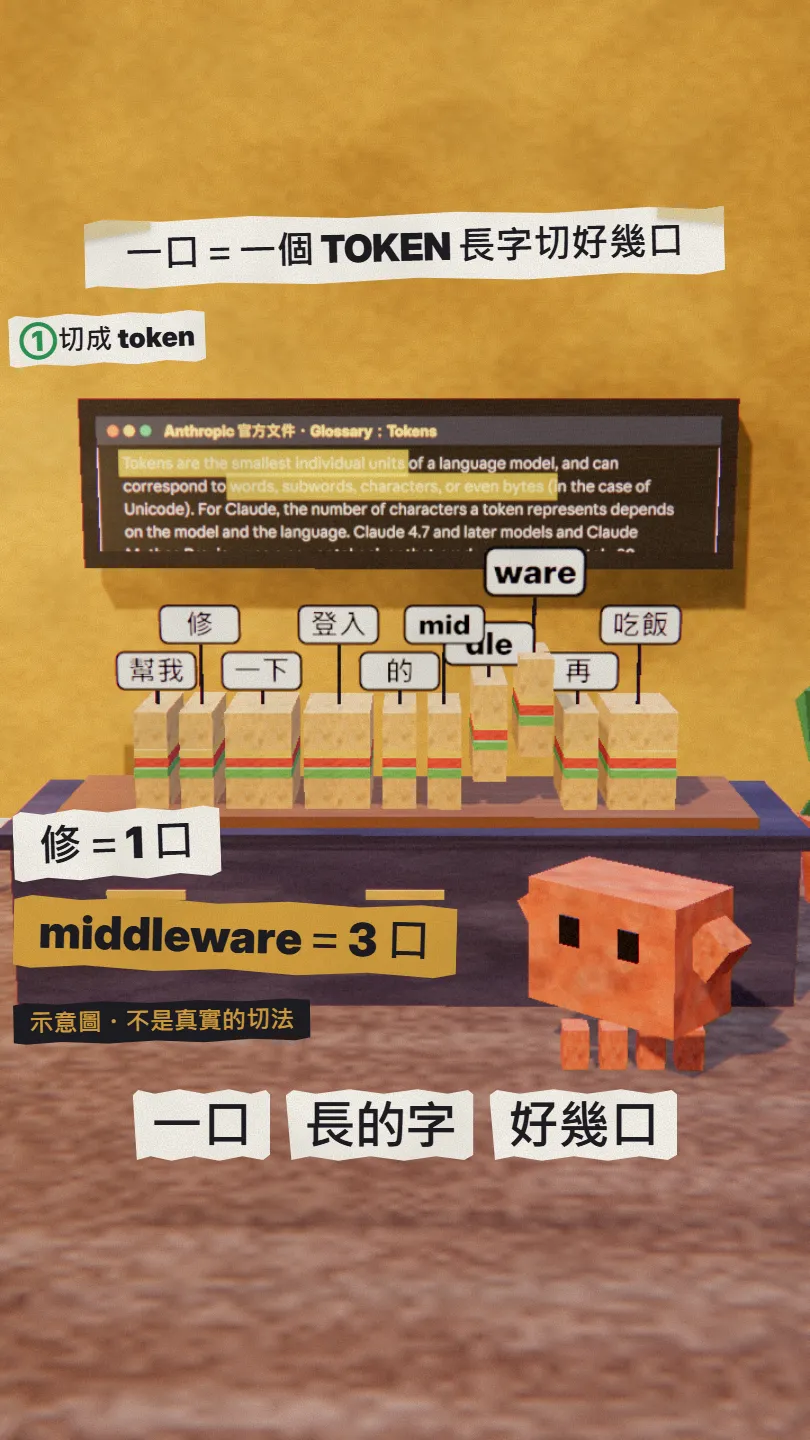
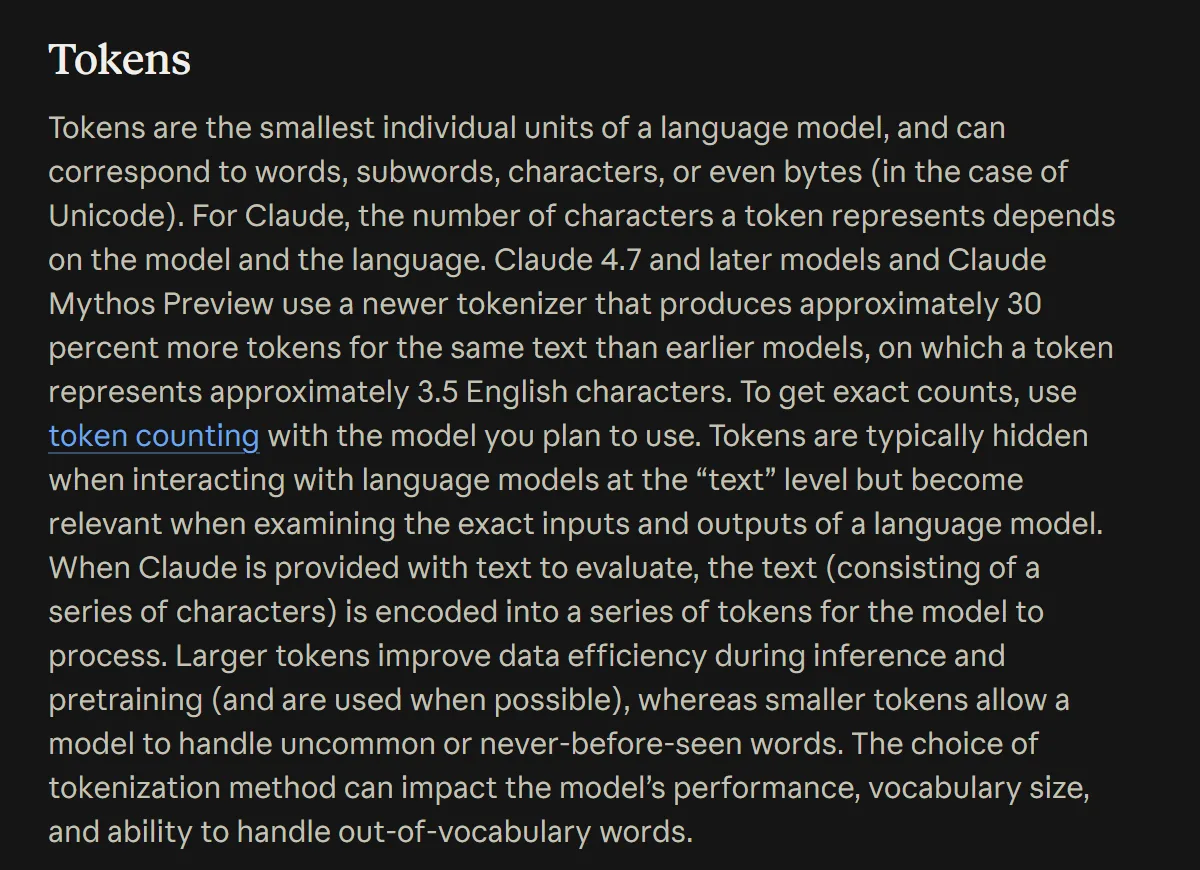
Anthropic's glossary puts it this way: tokens are the smallest units of a language model and can correspond to words, subwords, characters, or even bytes. How many characters one token stands for depends on the model and on the language.
- A common short word is usually one token.
- A rare or long word (like middleware) is split into parts, one token each.
- The reference figure in the docs: on earlier models, a token is about 3.5 English characters. That is for English; it does not apply to Chinese.
- There is no official conversion for Chinese, because it "depends on the model and the language". For an exact number, use token counting (below).
03Why newer Claude models use more: the same sentence, cut about 30% finer
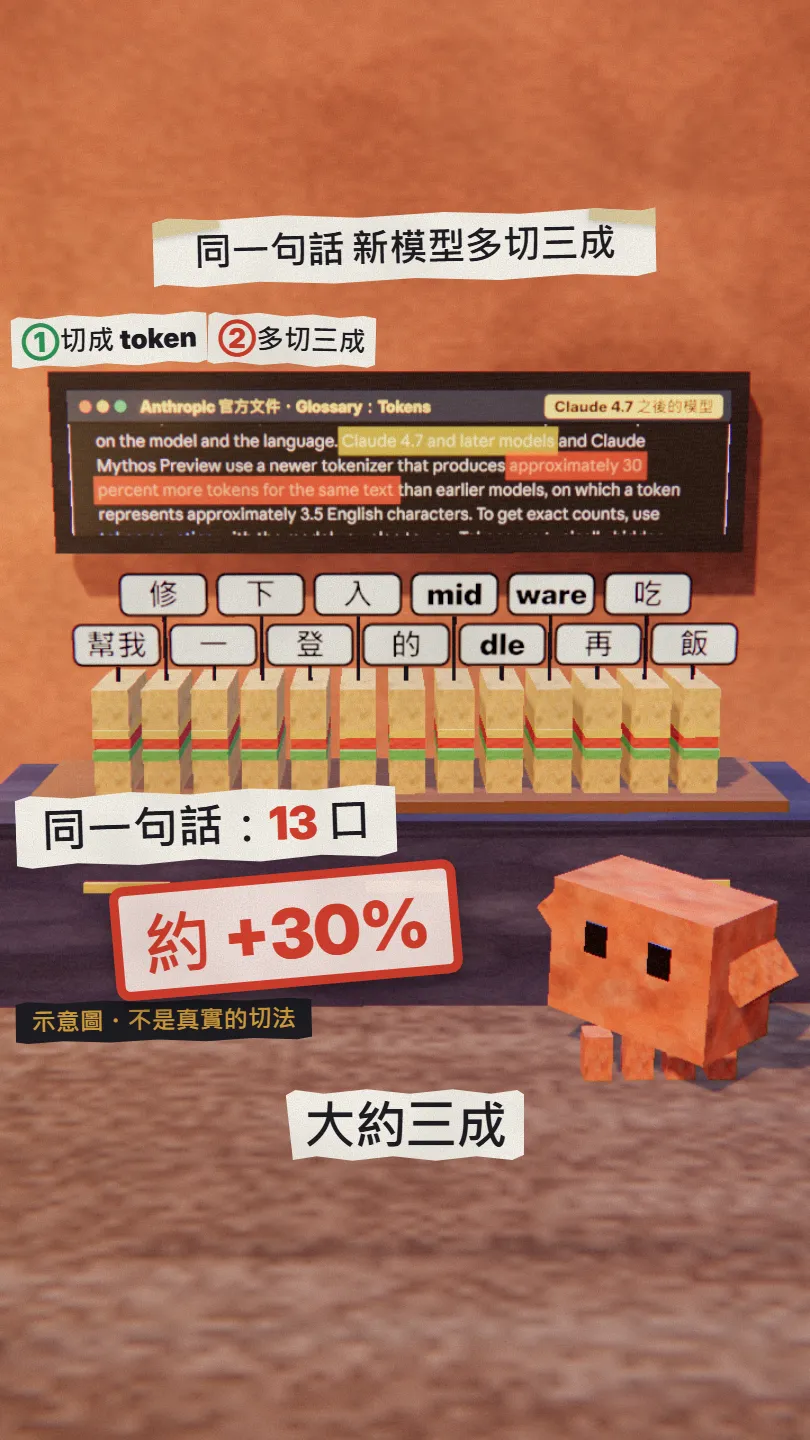
The glossary says it plainly: Claude 4.7 and later models (and Claude Mythos Preview) use a newer tokenizer that produces approximately 30 percent more tokens for the same text than earlier models. The text didn't grow; it is cut finer.
- Which models: the docs say "Claude 4.7 and later models". The token counting page adds that Claude Fable 5.1, Mythos 5.1, Fable 5 and Mythos 5 share the tokenizer introduced with Claude Opus 4.7.
- How much more: the word used is "approximately" 30%, and the exact increase depends on the content and workload shape.
- What it changes: the same message counts as more tokens on a newer model, so it takes more memory and costs more on the API.
- The official advice: after switching models, don't reuse counts measured on an older model; recount with the model you plan to use.
04Every bite fills the memory, and on the API it has a price
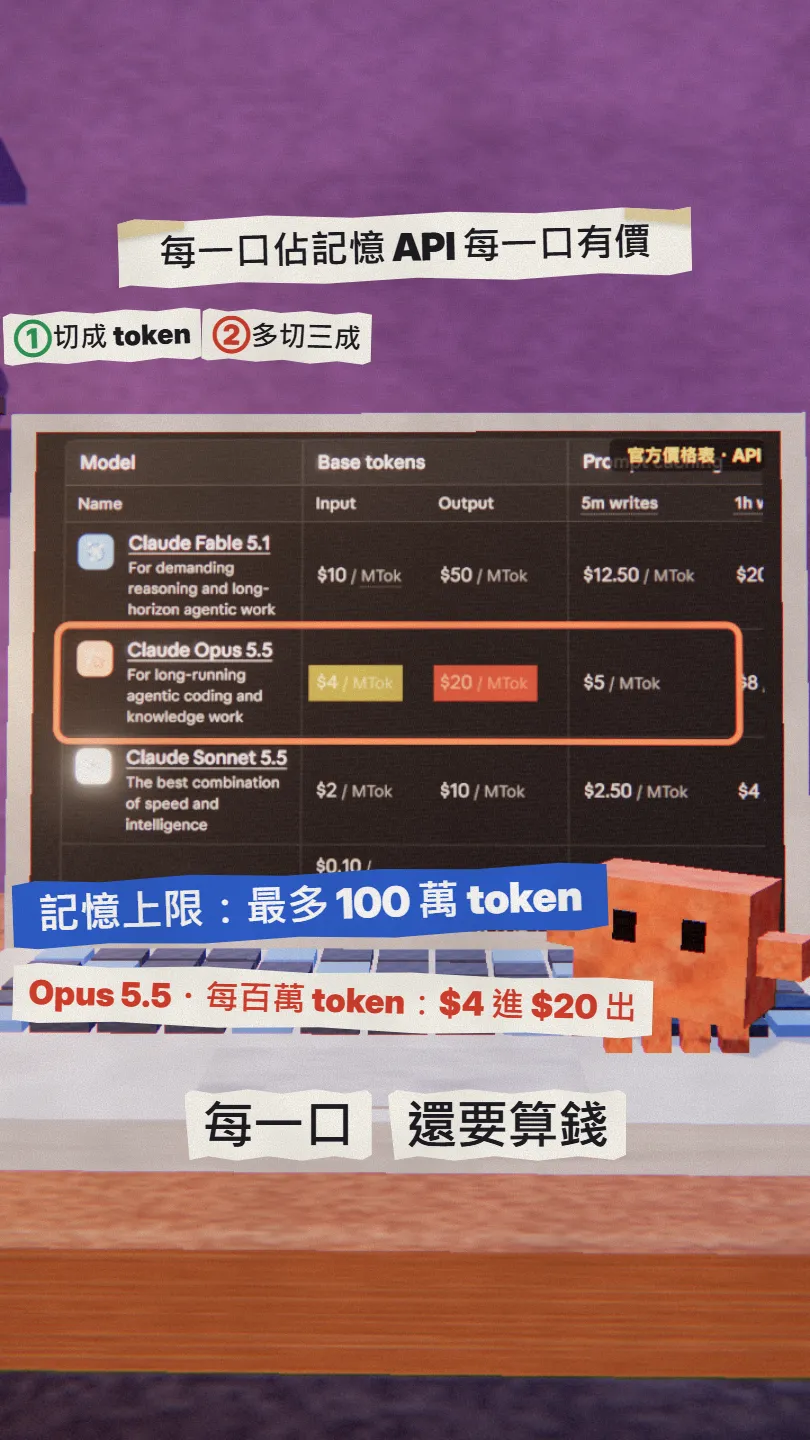
You feel tokens in two places. The first is memory: what Claude can look at in one go is the context window, which the glossary describes as the model's "working memory". Its limit is counted in tokens, up to 1 million depending on the model. The second is money: on the API, tokens are the billing unit.
- Memory: your messages, Claude's answers, attached files and tool results all count toward the context window.
- API prices (per million tokens, official pricing page on 9 Nov 2026): Claude Opus 5.5 $4 input, $20 output; Claude Sonnet 5.5 $2 input, $10 output; Claude Fable 5.1 $10 input, $50 output.
- The pattern: on every model, output costs 5x the input price.
- Claude's subscription plans (Pro, Max) are not billed per token. But the Help Center says message length, file attachment size and the current conversation's length all affect your usage limits.
05Fix 1: new topic, new chat
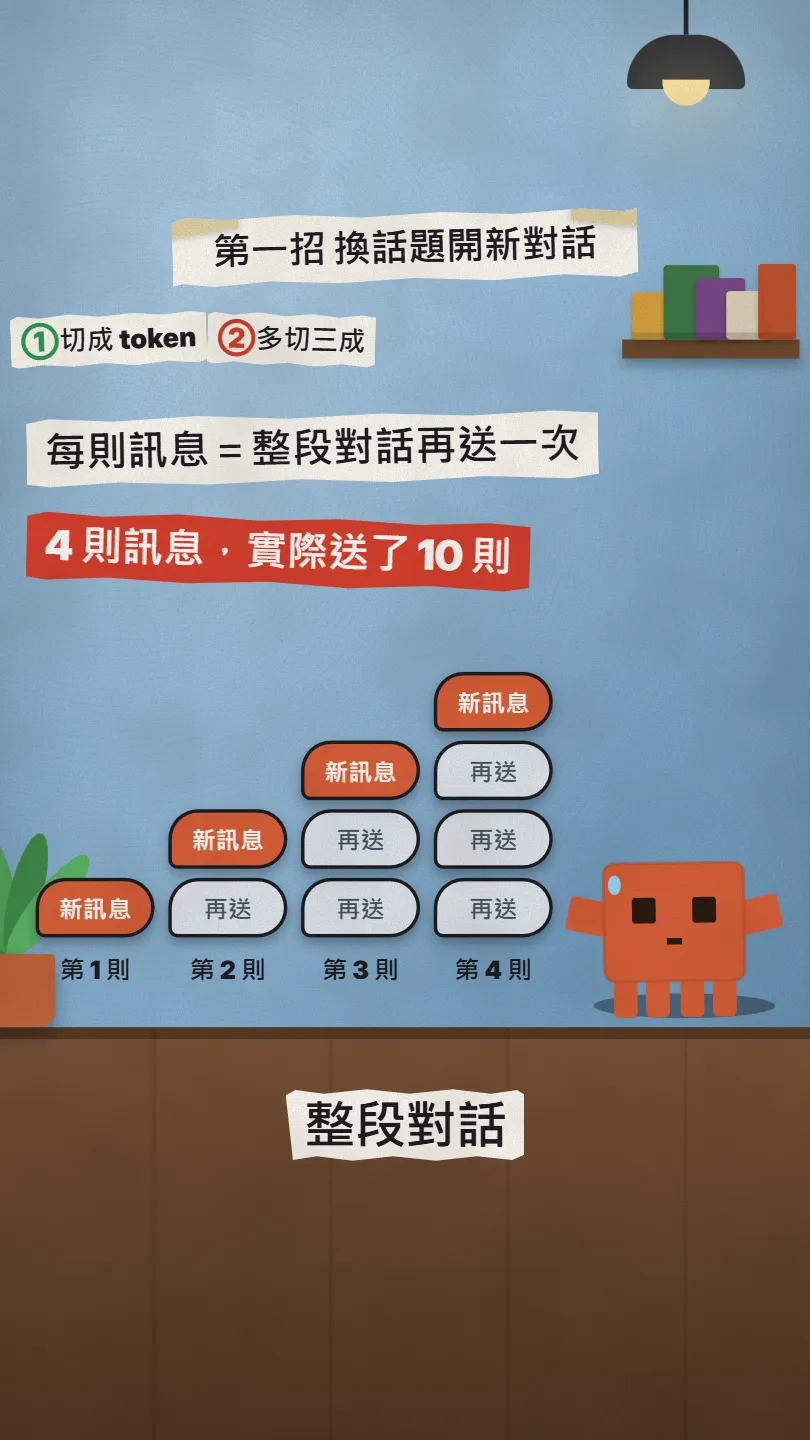
Claude's docs say the input of each turn contains "all previous conversation history plus the current user message". So the longer the chat, the more every new question drags behind it. By message 4, messages 1 to 3 go along again.
- Same topic: stay in the same chat, so Claude remembers what was said.
- New topic (from fixing a résumé to a coding question): open a new chat, so the old content doesn't come along.
- If the old chat holds something you need, ask Claude to boil it down first and paste that into the new chat.
I'm going to continue [this task] in a new chat.
Summarise our conclusions so far, what we have decided, and what is still open, as a list of at most 8 points that I can paste into the new chat. Don't repeat the original text.
06Fix 2: ask for shorter answers
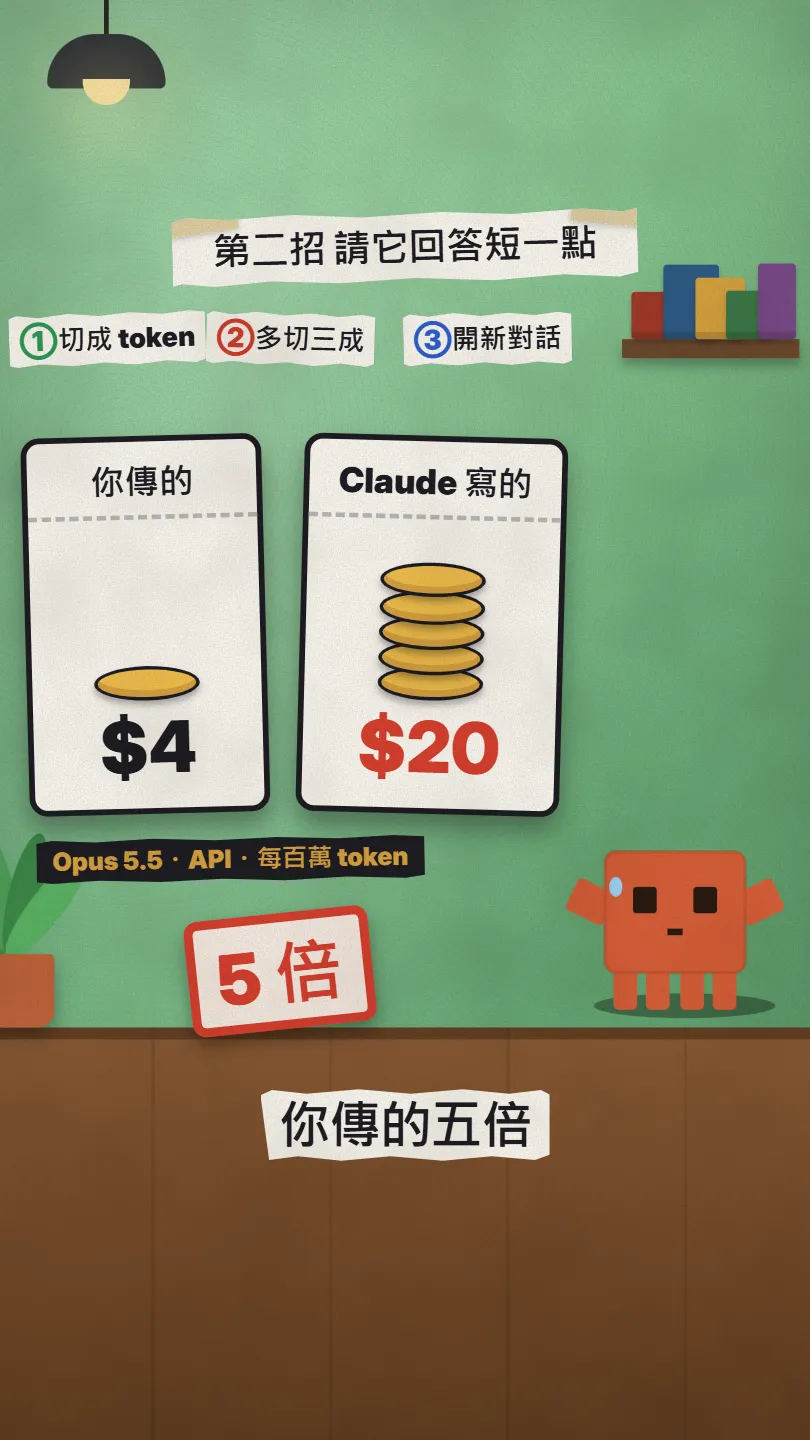
Since output costs 5x input, the cheapest saving is to have Claude write less. You don't need to shorten your question; just add one line after it saying how short you want the answer.
Answer in 3 bullets, no intro.
Give me only the parts you changed; don't paste the whole thing again. Say what changed in one sentence.
[your question]
Give me the conclusion in two sentences first. I'll say "expand" when I want the details.
07Want the exact number of tokens? Count before you send
If you use the API, Anthropic has an official token counting feature: you send it what you are about to send, and it tells you about how many input tokens that is. The docs say it is free to use (with a requests-per-minute limit) and that the count is an estimate that can differ slightly from the real one.
curl https://api.anthropic.com/v1/messages/count_tokens \
  -H "x-api-key: $ANTHROPIC_API_KEY" \
  -H "content-type: application/json" \
  -H "anthropic-version: 2026-10-21" \
  -d '{
    "model": "claude-opus-5-5",
    "system": "You are a scientist",
    "messages": [{
      "role": "user",
      "content": "Hello, Claude"
    }]
  }'
08Good to know
- The split on the sandwich is an illustration, and 10 bites becoming 13 is just a way to draw "about 30%". For real numbers, use token counting.
- "Approximately 30%" is the official wording and varies with the content; 3.5 characters is the English reference figure on earlier models, and there is no official figure for Chinese.
- 5x, $4 and $20 are API prices (pricing page on 9 Nov 2026; prices can change). Pro and Max are not billed per token, but longer messages and longer chats use up your limits faster.
- "4 messages, 10 actually sent" counts only your own messages. Claude's answers are in the history too and are sent again as well, so the real number is higher.
- The docs also note that chat interfaces like claude.ai may manage the context window on a rolling "first in, first out" basis, so in a very long chat the earliest content may no longer be there.
- Short is not the same as good. When you need full reasoning or complete code, let it write in full; don't save tokens until the answer is unusable.
Sources
- Anthropic docs: Glossary (Tokens, Context window; checked 2026-11-09)
- Anthropic docs: Pricing (input and output price per million tokens; checked 2026-11-09)
- Anthropic docs: Context windows (each turn's input contains all previous history; up to 1M tokens)
- Anthropic docs: Token counting (free, an estimate, the newer tokenizer; checked 2026-11-09)
- Claude Help Center: Usage limit best practices (factors that affect usage limits)
What should the next reel cover?
I test Claude and AI tools every day and turn the useful ones into reels. Follow @vivianlin.tech to catch each new guide.